Client events: how to organise a customer loyalty event
Client events are gatherings that a company organises for the people who already trust it, with one clear goal: to strengthen the relationship and make sure that trust lasts. They are not about selling on the spot, but about thanking, listening and sharing an experience that a sales meeting cannot offer.
Among all corporate events, they are among the ones that depend most on the details. A key client receives many invitations over the year, and will remember the one that was designed with them in mind. That is why, before choosing a format, it is worth being clear about who to invite, what you want to convey and what should happen afterwards.
Key takeaways
- A client event aims to strengthen the relationship, not to close sales during the event.
- It works better with a few well-chosen guests than with the entire client portfolio.
- The format depends on the goal: recognition, sharing knowledge or spending several days together.
- Personalisation and time to talk matter more than spectacle.
- Its value is measured afterwards, in the conversations it opens and in account continuity.
What are client events and what are they for?
A client event is a gathering, lasting a few hours or several days, that a company designs for its existing clients: a day of talks, a private dinner, an experience with accommodation or a celebration. Its main purpose is loyalty: looking after the relationship with those who already work with the brand so that they keep doing so and recommend it.
It should be distinguished from acquisition events, designed to attract potential clients, such as a trade fair or an open day. Both can coexist, but they call for different approaches. This article focuses on the former: events organised for those who are already clients and, above all, for the accounts that contribute most.
Why do events help build customer loyalty?
Events to build customer loyalty work because they change the context of the relationship. Away from the office and with no proposal on the table, client and company get to know each other differently.
Looking after existing clients also pays off. As reported by Harvard Business Review, acquiring a new client costs between 5 and 25 times more than retaining an existing one.
Between 25% and 95% more profit can result from a 5% increase in customer retention, according to research by Frederick Reichheld of Bain & Company.
Source: Amy Gallo, «The Value of Keeping the Right Customers», Harvard Business Review, 2014.
Taking the relationship beyond business
Sharing a meal, an activity or an unhurried conversation creates a personal bond that no follow-up meeting can achieve. It is this bond that sustains the relationship when difficulties arise or a competitor comes along with a similar offer.
81% of the executives surveyed by Forbes Insights believe that the informal moments at in-person meetings strengthen relationships with clients.
Source: Forbes Insights, «Business Meetings: The Case for Face-to-Face», 2009. Survey of 760 executives.
Recognising the clients who contribute most
Inviting a client to an exclusive gathering is a way of telling them that their trust matters. Recognition works when it is sincere and selective: if everyone receives the same invitation, it is no longer recognition.
Listening to clients outside the sales meeting
In a relaxed setting, clients share what they would not say in a formal meeting: what they feel is missing, what concerns them about their sector, where they want to go. For the host company, that information is as valuable as the event itself.
Sharing news in a context of trust
A client event is also a good moment to preview a product, a service or a change of direction. The key is for the news to accompany the experience, not replace it. If the launch is the centrepiece of the event, the approach is closer to a product launch event.
Types of client events by objective
No format is better than another: it depends on what you want to achieve and on the profile of your guests. The table summarises when each one fits best.
| Format | Main objective | When it fits |
|---|---|---|
| Exclusive gathering | Recognise and strengthen the relationship | Key accounts, small groups |
| Knowledge-sharing day | Provide professional value and build positioning | Technical sectors, long sales cycles |
| Multi-day experience | Build lasting bonds | Distributors, partners and major accounts |
| Thank-you event or celebration | Say thank you and share a milestone | Anniversaries, year-end or project close |
Exclusive gatherings for key accounts
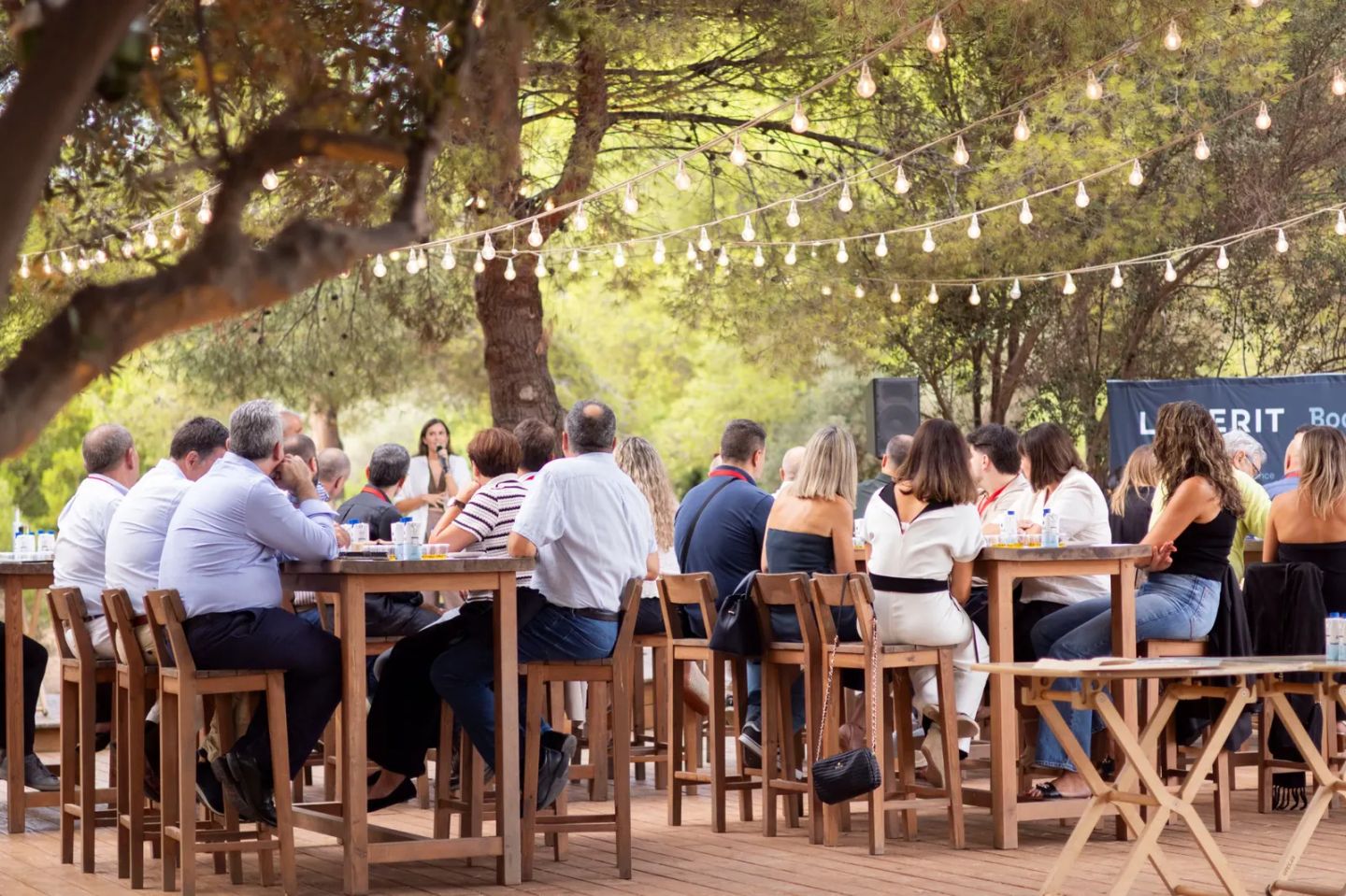
Private dinners, small-group days or tailor-made experiences for the most strategic clients. This is the most personal format and the one that best conveys recognition. It works with few guests and with the company's senior management present.
It is also a growing trend: according to the event management platform Bizzabo, its clients held 34% more in-person gatherings of fewer than 150 attendees in the first half of 2025 than a year earlier, a shift towards smaller, relationship-focused formats.
Knowledge-sharing days with clients
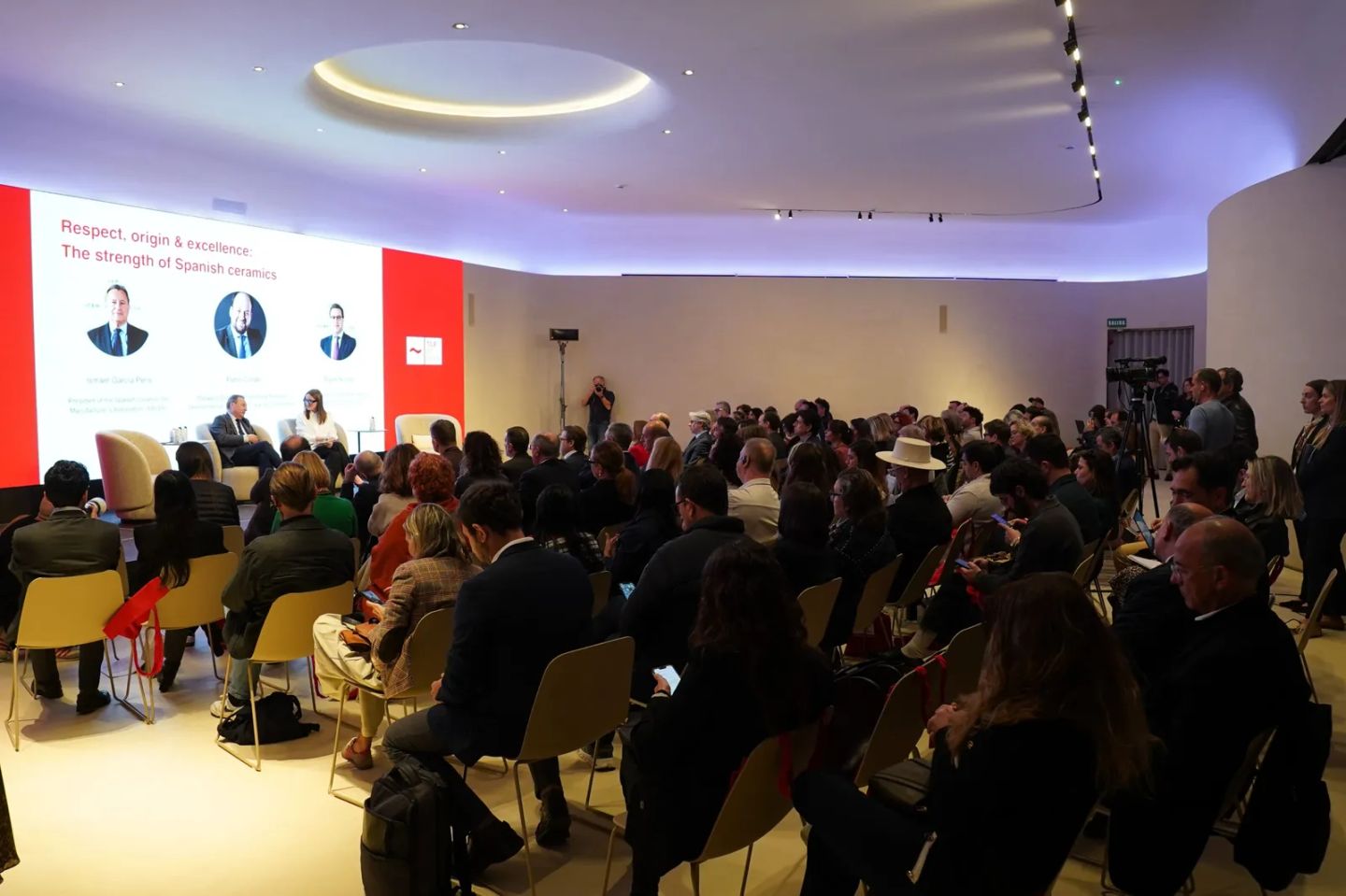
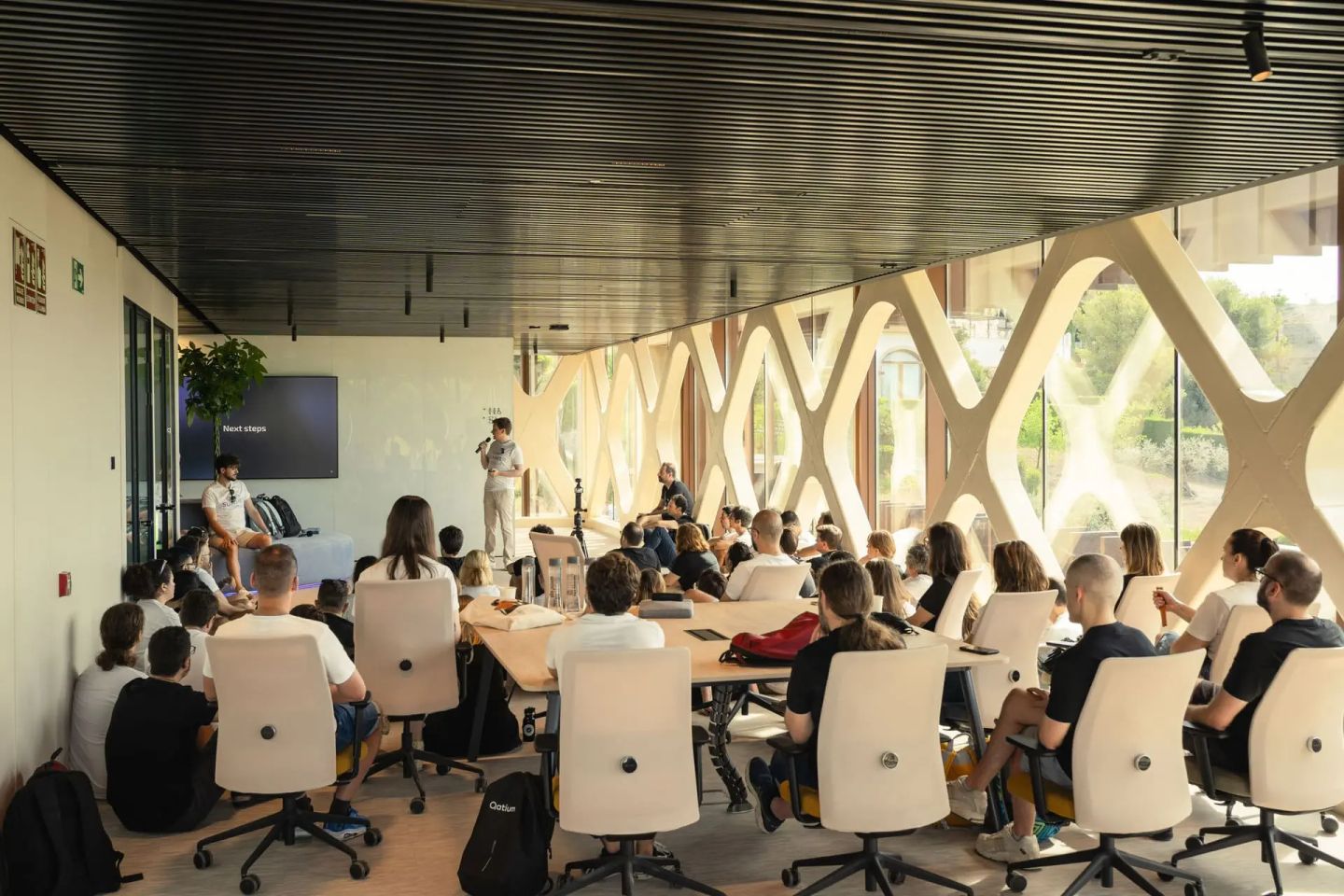
Forums, talks or working sessions in which the company shares trends in its sector, invites experts or discusses challenges with its clients. They provide professional value for guests and position the brand as a benchmark. They are particularly well suited to technical sectors or those with long buying cycles.
Multi-day experiences with accommodation
Programmes of two or three days that combine working sessions, gastronomy, activities and free time. They are common with distributors, partners and major accounts, and have a lot in common with incentive travel for companies. Their great advantage is time spent together: the relationships formed at an event like this last a long time.
Thank-you events and celebrations
A company anniversary, the close of a major project or the year-end holidays are natural occasions to bring clients together. At these times it pays to plan ahead, because diaries fill up quickly, as we explain in our article on corporate Christmas events.
Keys to a successful customer loyalty event
The logistics of any company event, from budget to suppliers, are covered in our guide on how to organise a successful corporate event. Here we focus on what makes a client event fulfil its purpose: building loyalty.
- Invite selectively. Choose clients based on their current value, their potential and the stage of the relationship. A short guest list lets you look after each guest; a long one turns the gathering into just another event.
- Personalise from the invitation onwards. A personal invitation, signed by the person who manages the relationship, already makes a difference. During the event, details such as knowing guests' food preferences or tailoring activities to the group make clients feel expected.
- Offer content that clients value. Talks that are useful for their business, access to experts or an experience they would not have on their own. What does not work is a sales pitch disguised as a working day.
- Choose a setting that invites conversation. The venue sets the tone of the gathering. A place outside the city, with nature, good food and accommodation, makes conversations last longer and keeps the rush away. Experiences that engage the senses, as we explain in our article on experiential events, are the most memorable.
- Act as hosts. Senior management and the team that deals with each client should be present and available. For guests, who welcomes them says as much as the programme itself.
- Continue the relationship afterwards. A thank-you message, the materials from the talks or a call to follow up on what was discussed. The event opens conversations; follow-up turns them into a relationship.
A client event is not measured by how impressive it is on the day, but by the relationship it leaves behind in the months that follow.
Mistakes that undermine a client event
- Turning it into a sales event. If clients feel they were invited to be sold to, the event loses its meaning.
- Overloading the agenda. A programme with no breaks leaves no time for what matters most: conversation.
- Treating all guests the same. A client of ten years and a recent one do not expect the same from the event.
- Not briefing the host team. Knowing who is attending, what their relationship with the company is and what to talk about avoids empty conversations.
- Forgetting the follow-up. Without a next step, the event remains just a good memory.
How do you measure whether an event has strengthened client relationships?
The impact of a loyalty event is not visible on the day, so it is worth deciding in advance what will be measured and what it will be compared with. These indicators help assess it:
- Attendance compared with confirmed invitations.
- Guest satisfaction, gathered through a short survey after the event.
- Sales conversations opened or resumed in the following weeks.
- Renewal, repeat business or expansion of contracts among attending accounts, compared with those that did not attend.
- Referrals and new contacts that come through guests.
To translate this data into return, we review the most common KPIs in our article on measuring ROI in corporate events.
Bellver Blue Tech Zone: a setting for high-level client events
Bellver Blue Tech Zone brings together in a single location, facing the Mediterranean on the Costa del Azahar (Castellón), everything a client event needs: meeting spaces, gastronomy, accommodation, activities and an in-house team that supports the organisation from start to finish.
- Spaces for every moment. The Zenit conference room for talks and working days, meeting rooms for smaller gatherings, and courtyards and terraces for open-air dinners and cocktails.
- Memorable technology. Vortex, a 360° LED cylinder for immersive experiences, lets you unveil news or share content in a way guests will not forget.
- Mediterranean gastronomy. Masía Bellver and Restaurante Tempus host working lunches, private dinners and celebrations.
- Accommodation on site. Hotel Masía Bellver, a few minutes' walk from the event spaces, makes multi-day programmes possible.
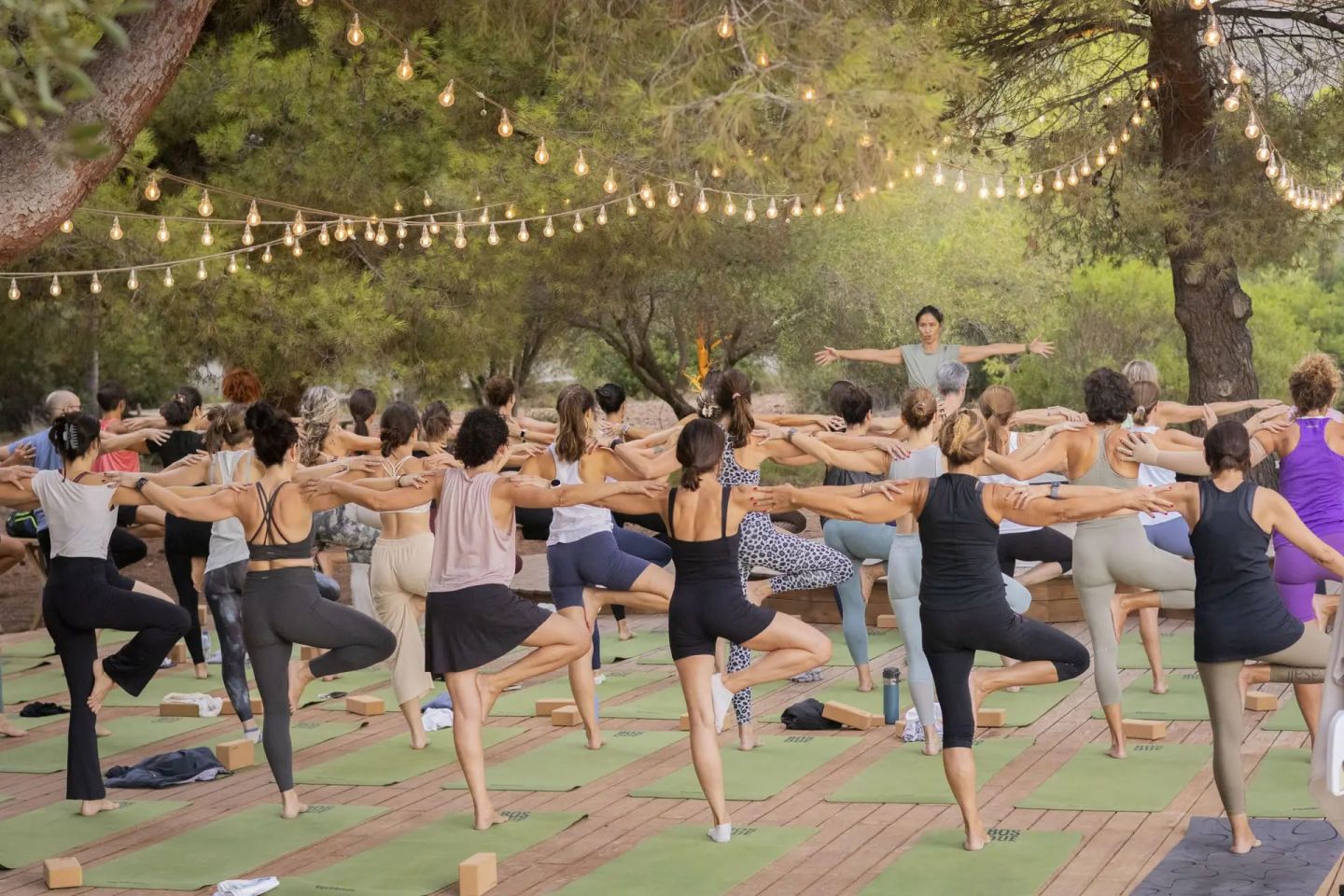
- Activities to share. Bike routes, padel, yoga or a trip to the Columbretes Islands, organised with trusted partners.
Located between Valencia and Barcelona, 10 minutes from Castellón station, it is easy to reach and, at the same time, secluded enough for the gathering to set its own pace.
If you are planning a gathering for your clients, discover the event spaces at Bellver Blue Tech Zone and tell us what you have in mind. We will design an event with you, tailored to your guests.
Frequently asked questions about client events
How often should you organise a client event?
It depends on the sector and the size of the client portfolio. Many companies hold one major gathering a year and complement it with smaller meetings for key accounts. What matters is that each edition has a purpose and does not become routine.
How many clients should you invite?
Enough to create atmosphere and conversation, but not so many that the host team cannot look after each one. At a loyalty event, a few well-chosen guests usually achieve better results than a mass invitation.
Can you also invite potential clients?
Yes, in moderation. A potential client who shares the event with satisfied clients receives the best possible recommendation. But if they are in the majority, the event stops being about loyalty, and existing clients notice.
How far in advance should you organise it?
The longer and more exclusive the format, the more lead time it needs, because guests' diaries and the availability of the venue and accommodation set the pace. For a multi-day programme with accommodation, it is worth starting several months in advance.
About the Author
Bellver Blue Tech Zone
The editorial team of Bellver Blue Tech Zone. We share stories about experiences, professional gatherings and celebrations in our Mediterranean setting.