How to Organise a High-Impact Experiential Event: A Step-by-Step Guide

Defining Objectives and Audience: The Starting Point
Before thinking about how to do it, you need to answer questions like: What do I want to achieve? Or who is my audience? These answers will form the basis for designing a coherent strategy, guiding every decision and ensuring that the experiential event achieves its objectives.
Conceptualisation and Creativity: The Spark of the Idea
The creative phase is extremely important. This is where the event's concept is defined and what elements are needed to achieve it: a specific space, branding… It is essential that creativity is aligned with the brand's identity and what it aims to convey.
Logistical and Technical Planning: From Paper to Reality
A great idea requires flawless execution. Logistical and technical planning is responsible for turning these ideas into tangible and memorable experiences. Venue, customisation and adaptation of spaces, lighting, sound, technology…
At Bellver Blue Tech Zone, we combine creativity, cutting-edge technology, a production team, and audiovisual technicians to ensure that each experience not only meets its objectives but also generates a lasting emotional impact, transforming the initial vision into a real experience that attendees will remember.
Measurement: An Event Is Not Sustained by Emotions Alone
Experiential corporate events aim to create memorable emotional connections between the brand and its audiences. However, for them to have a real impact on the business strategy, it is necessary to go beyond subjective experience and rely on concrete data.
Measurement should address tangible and qualitative indicators, allowing for the evaluation of the event's effectiveness in relation to the objectives set:
Reach and participation: number of in-person and virtual attendees, time spent on activities, interactions in each dynamic.
Business generation: leads obtained, subsequent conversions, increase in sales or commercial inquiries associated with the event.
Digital and media impact: mentions on social media, engagement in publications, coverage in the press and specialised media.
Audience satisfaction: post-event surveys, Net Promoter Score (NPS), analysis of comments and direct feedback.
Return on Investment (ROI): relationship between the cost of the event and the tangible benefits it generated, whether in economic terms or brand positioning.
In addition, technological tools can be incorporated to refine measurement: real-time participation applications, big data analysis, registration systems using QR codes, or artificial intelligence for sentiment analysis on social media.
The Future of Experiential Events: Trends That Will Set the Pace
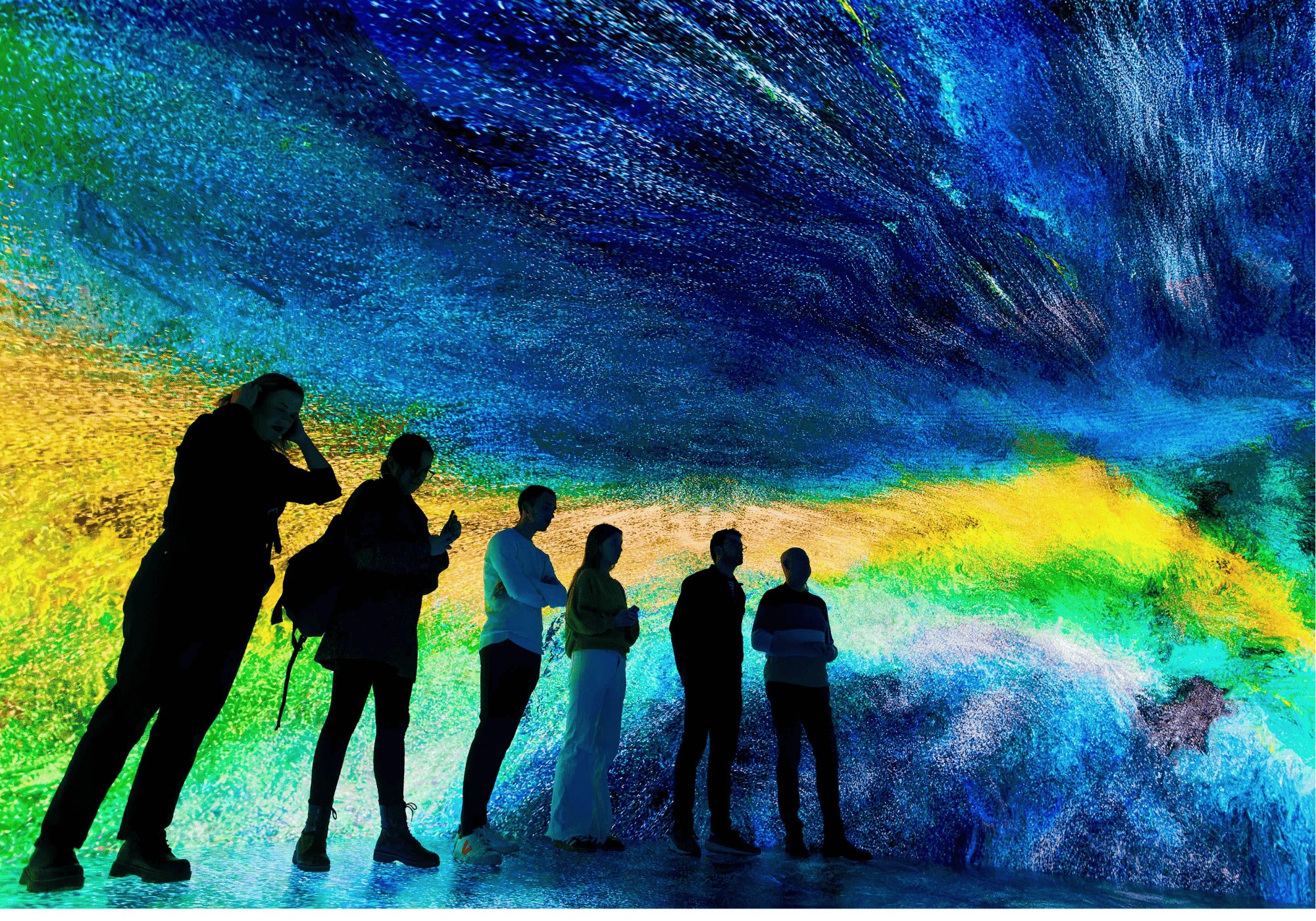
Technology is transforming the way we experience events. 360º experiences can transport attendees to entirely new universes, offering total immersion. Furthermore, other trends shaping the sector are hybrid events, which combine physical and digital elements.
In essence, experiential events go beyond a fleeting trend: they are the evolution of marketing in an era where consumers want to experience, feel, and remember. For brands, they are an invaluable opportunity to stand out, build authentic relationships, and convert customers into loyal followers.