Hybrid Corporate Events: The Perfect Combination of In-Person and Virtual
A hybrid event is a gathering that takes place in a physical venue and online at the same time: part of the audience attends in person and part follows and takes part live from elsewhere. Done well, hybrid events combine the connection of meeting face to face with the reach of digital, but they require planning for two audiences from the start and corporate event venues and technical teams ready for it.
In this article we explain what a hybrid event is, how it differs from a virtual one, which examples work for companies and how to plan one step by step.
Key points of this article
- A hybrid event brings together in-person and remote attendees who take part live.
- In-person remains the dominant format, and hybrid works best as a way to extend reach.
- The biggest challenge is remote engagement: you need to design two experiences, one for the room and one for the screen.
- It works well for conferences, conventions, kick-offs, training and product launches.
- The venue needs reliable connectivity, good sound and image, and a production team.
What is a hybrid event?
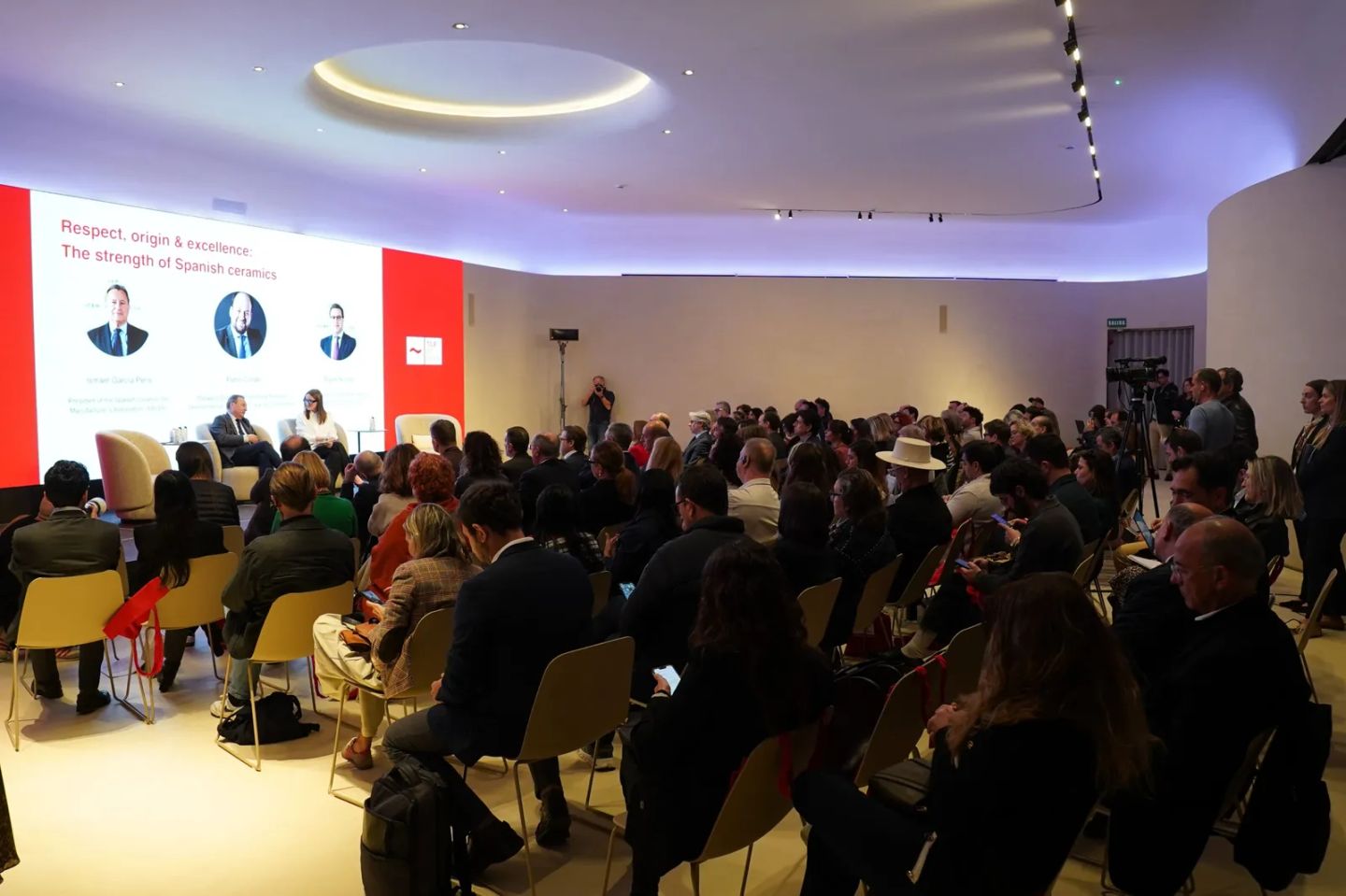
It is a format that combines in-person and virtual experiences simultaneously. Talks, panels or presentations take place in a venue and are streamed live, and the remote audience can ask questions, vote or speak just like those in the room. That participation is what sets it apart from a simple livestream.
In-person, virtual and hybrid events compared
| Format | Where the audience is | What it does best | What it demands |
|---|---|---|---|
| In person | At the venue | Relationships, networking, full experience | Travel and accommodation |
| Virtual | Online only | Reach and low cost per attendee | Holding attention on screen |
| Hybrid | At the venue and online at once | In-person value plus reach, in one event | Technical production and a double experience design |
If your event will be online only, read our article on virtual corporate events.
20% of corporate meetings and events planned for 2025 were expected to be hybrid, against 59% in person only and 21% virtual only.
Source: 2025 Global Meetings and Events Forecast, Amex GBT, reported by MICE Net
In-person remains the core, and for good reason. According to the Freeman Commercial Trends Report 2025, 74% of business event attendees name in-person events as their main way to discover new products and services, compared with 40% who cite online events. That is why hybrid works best as a way to extend an in-person event rather than replace it.
Benefits of hybrid events
Wider reach
Hybrid events remove geographical barriers. People who could not attend because of distance, time, mobility or budget can take part wherever they are, while the event keeps its in-person core.
Flexibility
Sessions are recorded, so attendees can watch them when it suits them or revisit them later, which helps busy diaries and teams across time zones.
Cost control
Not everyone has to travel. The company can reserve travel and rooms for those who add most in person and invest in content and production instead. The Amex GBT 2027 Global Meetings and Events Forecast, as summarised by Hotel Dive, finds that 37% of meetings professionals plan to run more virtual events to cope with rising costs in 2027.
Audience data
Streaming platforms record who joins, for how long, which sessions they watch and how they take part, which helps measure the event and improve the next one.
The challenges of hybrid events
Hybrid is not easy, as many organisers have found. According to event platform Swoogo’s Eventscape 2025 report, cited in its list of event statistics, 54% of organisers who have stopped running hybrid events say engagement was not high enough, and 48% believe hybrid takes away from the experience of in-person attendees. The main challenges are:
- Two audiences to serve. If nothing is designed for remote attendees, they become passive viewers and drop off.
- More technical production. Cameras, sound, direction and connectivity are critical: a failure is felt in the room and on screen at once.
- Different agendas. Attention spans are shorter on screen, and breaks work differently.
- Uneven networking. Informal encounters happen naturally in person; for remote attendees they have to be designed.
Hybrid event examples
| Type of event | How it works as hybrid | The key |
|---|---|---|
| Conferences and conventions | Talks are streamed and online attendees join the Q&A | Active moderation and shorter online sessions |
| Senior leadership meetings | The meeting is held at one venue and those who cannot travel join by video | Good audio and clear speaking turns |
| Annual kick-offs | Part of the workforce attends in person and other offices connect | Moments designed for remote offices to take part |
| Internal training | Some attend in person while other teams join from their offices | Downloadable materials and recorded sessions |
| Product launches | The brand presents to clients and press and streams it to other markets | Production designed for the screen from the start |
For product launches, read our guide on how to plan a product launch event.
How to plan a hybrid event, step by step
- Set the goal and each audience’s role. Who needs to be in the room and who can follow remotely? What will remote attendees be able to do: ask, vote, work in groups?
- Design two experiences. One agenda for the room and one for the screen: shorter online sessions, breaks with their own content and moments built for those watching remotely.
- Secure the technology and production. A stable platform, several cameras, quality sound, backup connectivity and a dedicated AV team. Read more in our article on technology for corporate events.
- Appoint a moderator for the remote audience. Someone who gathers questions, brings in remote speakers and makes those online visible to the room.
- Drive real-time interaction. Chat, polls, live voting or group activities that mix attendees from both sides.
- Rehearse and measure. Run a full technical rehearsal at the venue and decide in advance what you will track. Our guide to measuring ROI in corporate events lists the most useful indicators.
A hybrid event is not an in-person event with a camera at the back: it works when remote attendees feel they are part of it too.
Hybrid events at Bellver Blue Tech Zone
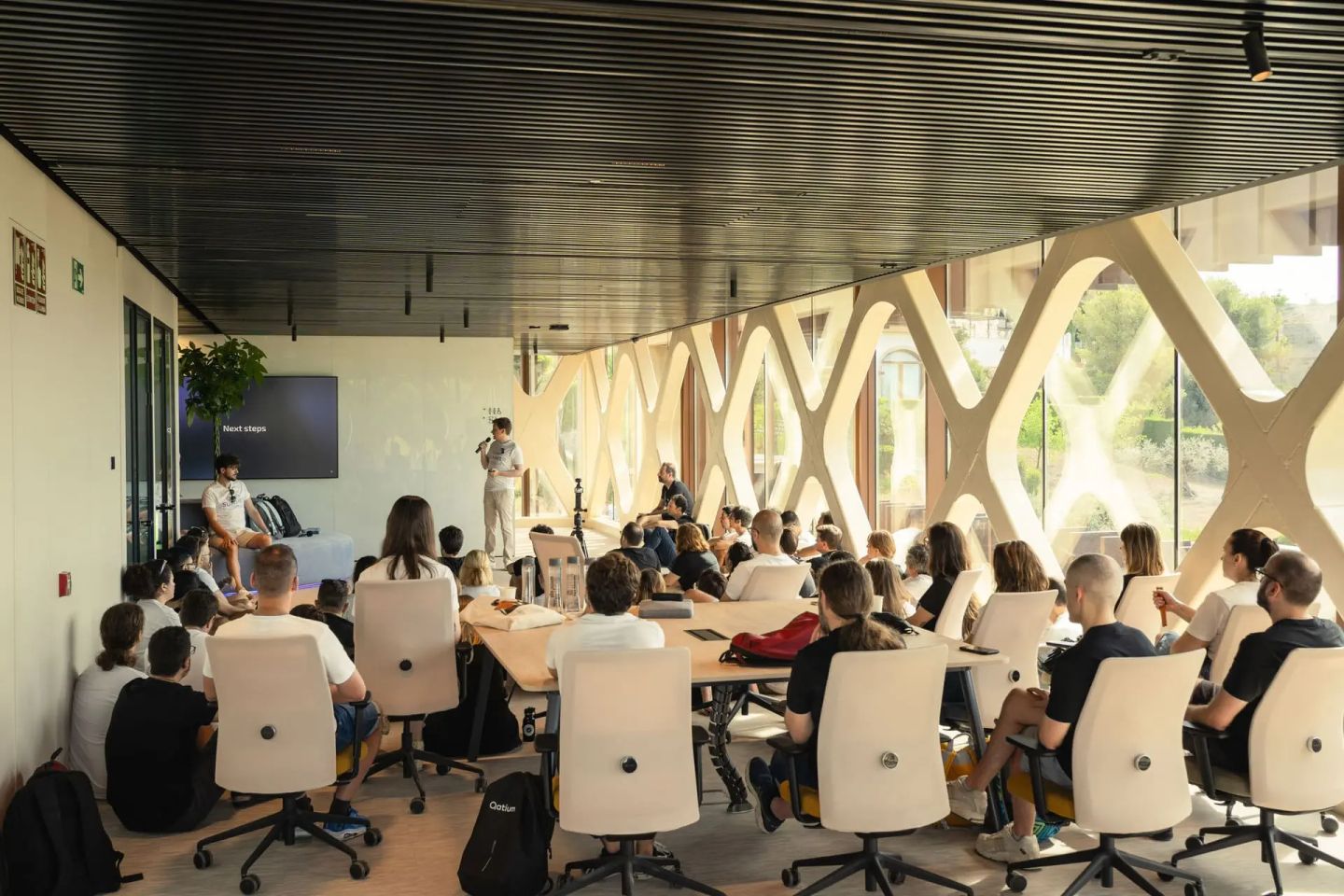
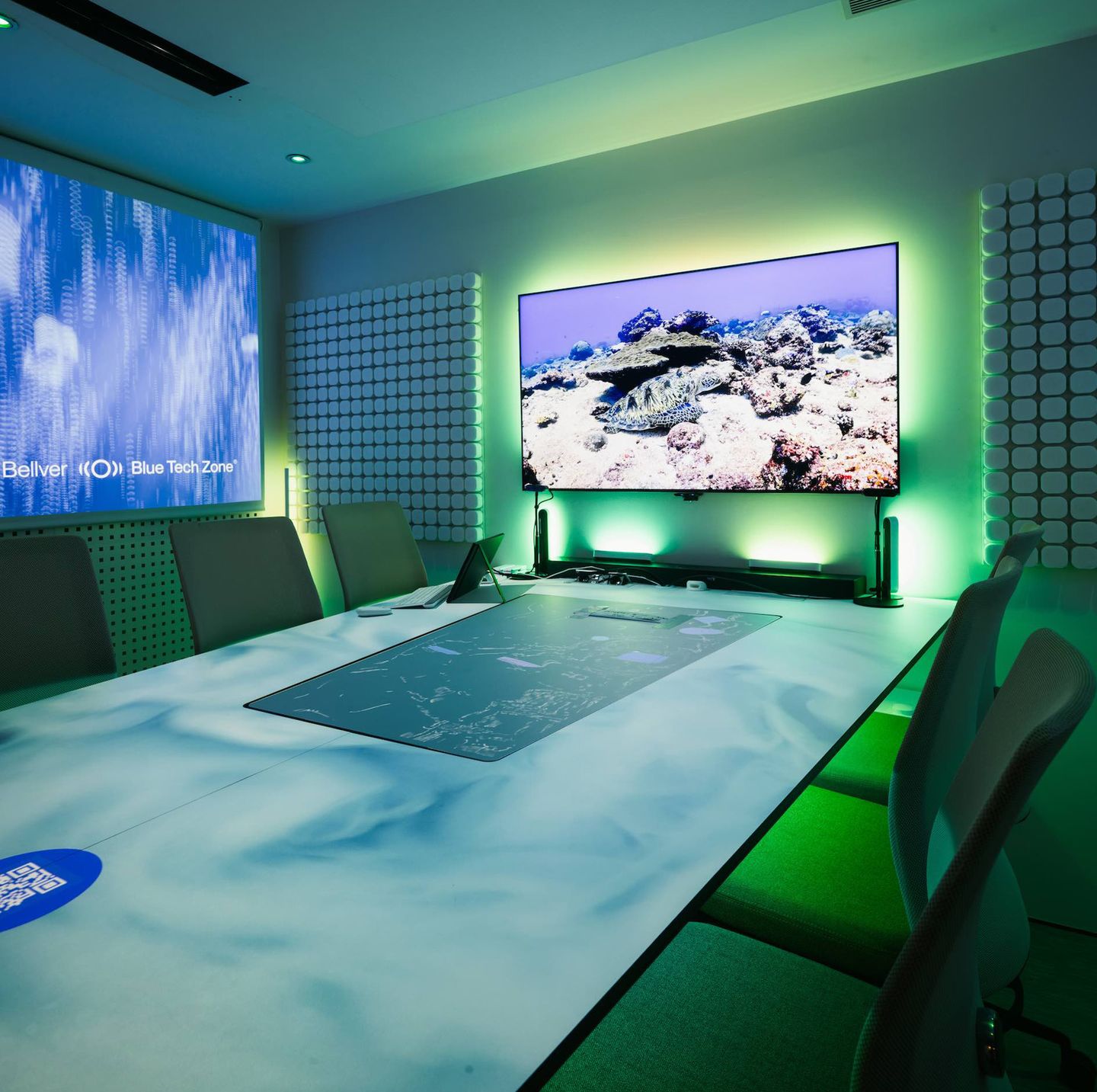
At Bellver Blue Tech Zone, on Spain’s Mediterranean coast between Valencia and Barcelona, technology is part of the place. Zenit, our conference room, has an 8.40 × 2.70 m screen and seats up to 144 people theatre-style; Vortex, a 360° LED cylinder, hosts immersive experiences; and e·HUB offers work and networking space for teams.
Alongside our event spaces, our regular partners provide AV production and simultaneous interpreting, and we take care of accommodation and catering for those attending in person. If you are planning a conference, launch or training session with a remote audience, see our event room rental in Castellón.
Hybrid event FAQs
What is the difference between a hybrid event and a livestream?
In a livestream the remote audience only watches. In a hybrid event it takes part: asking, voting or speaking live, just like those in the room.
What do you need technically for a hybrid event?
At minimum, a stable connection with backup, cameras, quality microphones, a streaming platform with engagement tools and a team handling production throughout.
Which events work best as hybrid?
Content-led ones: conferences, conventions, training, kick-offs and product launches. Events whose value lies in being together, such as an incentive trip, are a weaker fit.
How do you keep remote attendees engaged?
With shorter sessions, a dedicated moderator, frequent interaction and content designed for the screen rather than simply carried over from the room.
About the Author
Bellver Blue Tech Zone
The editorial team of Bellver Blue Tech Zone. We share stories about experiences, professional gatherings and celebrations in our Mediterranean setting.