Workplace wellbeing: how spaces connected with their surroundings transform the work experience
For years, workspaces have been designed mainly from a functional perspective: desks, meeting rooms and operational areas created to respond to business needs. However, the way we understand work is evolving.
Today, we know that the environment where we carry out our professional activity directly influences how we feel, how we collaborate and how we develop our potential. Workplace wellbeing no longer depends solely on working conditions, but also on the spaces we inhabit every day.
New work models seek to create more human environments, capable of connecting technology, nature and design to generate experiences that encourage creativity, concentration and connection between people.
In this context, healthy workplaces become living ecosystems where the environment supports people and enhances new ways of working.
The workplace as a key factor in improving workplace wellbeing
The place where we work has a direct impact on our daily experience. Lighting, space distribution, materials, acoustics and the integration of natural elements are factors that can transform the way we experience our working day.
A workspace designed around the concept of workplace wellbeing does not only seek to optimise square metres, but rather to create environments capable of responding to different needs: concentration, collaboration, learning, rest or inspiration.
Companies that invest in more conscious environments understand that space is a strategic tool to support their teams and build a more positive relationship with work.
This evolution also responds to a change in professionals’ expectations. According to the State of Work-Life Wellness report, 83% of employees consider workplace wellbeing to have an important impact on their work experience.
Source: Wellhub - State of Work-Life Wellness Report
In addition, factors such as company culture, internal communication and the sense of belonging influence how people connect with an organisation. In this sense, understanding the importance of organisational motivation helps explain how the physical environment can become part of a more complete workplace experience.
The importance of designing people-centred spaces
The workplaces of the future put people at the centre of design.
This means creating flexible environments capable of adapting to different rhythms and ways of collaborating. Ergonomics, natural light, environmental quality and the possibility of having different areas depending on the activity are essential elements for building healthier and more comfortable environments.
A well-designed space not only improves the daily experience, but also encourages creativity, connection between professionals and the generation of new ideas.
How the environment influences team motivation and productivity
Workplace wellbeing is closely related to the way we perceive our surroundings.
A pleasant, stimulating environment that responds to our needs can enhance team motivation, concentration and productivity.
Compared with the traditional office model as a purely operational place, new professional spaces are becoming settings for interaction, innovation and personal development.
Because working better also means working in places that inspire us.
Nature and architecture: connection with the surroundings as an element of workplace wellbeing
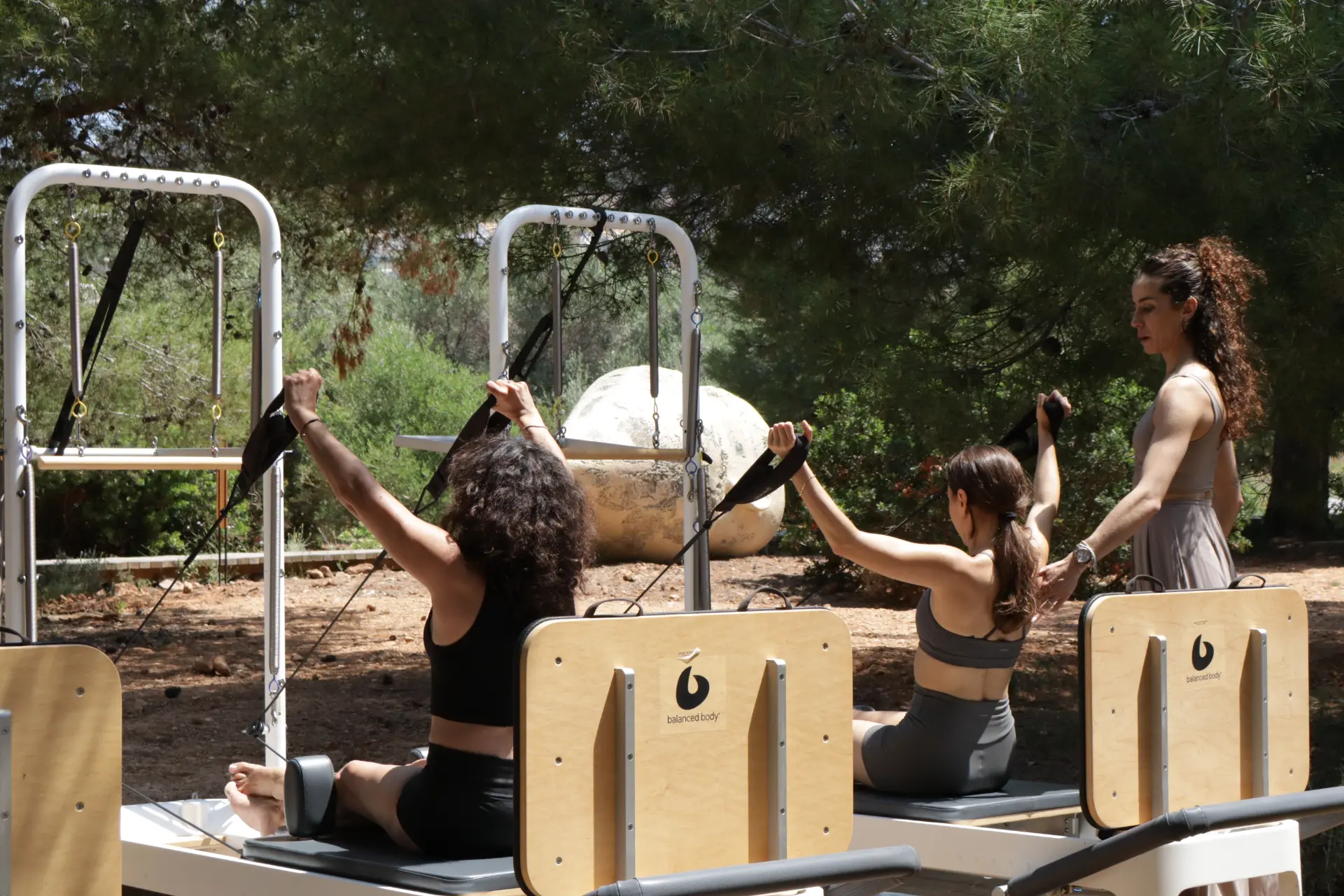
Connection with nature has become one of the main pillars of contemporary space design.
Environments that integrate natural elements help create a more balanced relationship between people and the places they inhabit. Architecture is no longer only a physical structure, but becomes a bridge between the territory and human experience.
Incorporating nature, materials connected to the surroundings and open spaces helps create environments where people can feel more connected and comfortable.
Workspaces that integrate nature and technology
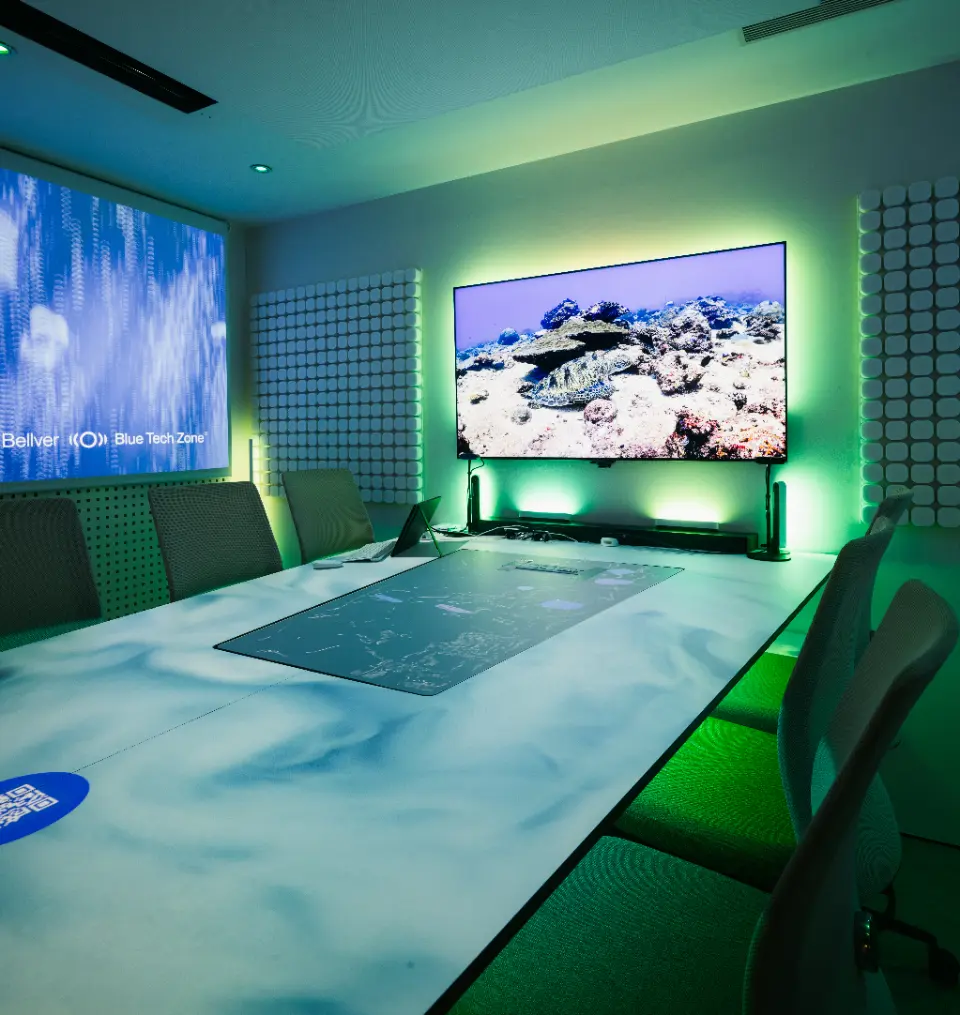
Technology and nature are not opposing concepts. When they are properly integrated, they can create smarter, more efficient environments adapted to people’s needs.
From systems that optimise environmental conditions to immersive experiences that connect people with the surroundings, innovation makes it possible to design new models of professional spaces where technology is at the service of wellbeing.
The World Health Organization highlights that a healthy workplace must address both the physical conditions of the environment and the social and organisational factors that influence people’s health and wellbeing.
Source: World Health Organization - Healthy workplaces: a model for action
At Bellver Blue Tech Zone, we understand technology as a transformative force capable of improving the relationship between people, the environment and the way we experience our spaces.
From traditional buildings to connected work ecosystems
The concept of the office is evolving towards more open and dynamic models.
Professional spaces are no longer isolated places, but rather ecosystems where work, knowledge, innovation and experiences coexist.
This new vision understands the territory as an extension of the workplace itself, creating connections between architecture, nature, community and technology.
Technology at the service of employee wellbeing
Technological innovation is transforming the way we design and use workspaces.
When technology is placed at the service of people, it enables the creation of more comfortable, efficient and personalised environments.
The goal is not to incorporate technology for its own sake, but rather to use it as a tool to improve the human experience.
Smart environments adapted to people’s needs
Smart spaces make it possible to better respond to the needs of the people who use them.
Efficient resource management, environmental adaptation and the creation of personalised experiences open up new possibilities for employee wellbeing.
These systems help build more conscious spaces, where every element works together to create a more pleasant and connected experience.
Innovation to create new ways of working and connecting
Innovation is also changing the way people collaborate.
New spaces encourage interaction, knowledge exchange and collective creation.
The combination of design, technology and community makes it possible to create places where new ideas emerge and where professional relationships evolve.
Along the same lines, technology applied to other professional environments is also transforming the way connections are created. Technology for corporate events makes it possible to develop more interactive and personalised experiences aligned with organisational objectives.
What a healthy and innovative workplace should include
Creating a healthy workplace means understanding that every detail influences people’s experience.
An environment prepared for the future must combine functionality, design, technology and connection with the context that surrounds it.
Collaborative spaces that encourage creativity
Collaboration requires places designed to facilitate the exchange of ideas.
Open areas, flexible spaces and environments prepared for different dynamics allow teams to find new ways of creating together.
In addition to the design of the space itself, companies can strengthen team connections through experiences that encourage collaboration, such as team building plans and activities for corporate teams.
Spaces that allow people to disconnect and recover energy
Workplace wellbeing also requires spaces where people can change their pace, find moments of calm and recover energy.
Environments that incorporate rest areas, nature or spaces for disconnection help create a more balanced experience throughout the working day.
Environments aligned with company values
The workplace also communicates who an organisation is and the importance it gives to its people.
An environment designed around values such as innovation, sustainability or care reflects a different way of understanding the future of work.
Spaces prepared for companies looking for new ways of working
Organisations looking to transform the way they work need places capable of supporting that change.
Bellver Blue Tech Zone offers an environment where professional meetings, experiences, innovation and connection with the territory are part of the same vision.
Creating memorable experiences is also part of this evolution. Experiential events make it possible to connect people with spaces, brands and values through experiences designed to create deeper relationships.
Because the future of work is not only about where we work, but also about how we want to experience that journey.