Organising medical and pharmaceutical congresses: what to consider

A well-organised medical congress is where healthcare professionals share advances, update their knowledge and build relationships that last beyond the event itself. To achieve this, organising medical congresses rests on three pillars: a scientific committee that safeguards the quality of the content, an organising committee that takes care of every detail and, if continuing education credits are to be offered, accreditation requested at least two months in advance.
When the event involves the pharmaceutical industry, Spain’s Farmaindustria Code of Good Practice adds some guidelines worth bearing in mind from the outset: scientific content must take up at least 60% of each day, and both the venue and the programme must serve the professional purpose of the event, with no leisure activities. These criteria reinforce precisely what gives a congress its value: its scientific quality.
Keys to organising a medical congress
- A scientific committee and an organising committee, from the start.
- Continuing education accreditation must be requested at least two months before the event.
- When the pharmaceutical industry is involved, at least 60% of each day must be scientific content, the venue must be appropriate and there are no leisure activities.
- If there is an overnight stay and 20 or more healthcare professionals take part, the meeting must be notified to Farmaindustria 10 working days in advance.
In this guide we go through the steps for organising a medical congress or a pharmaceutical sector meeting in Spain, the requirements worth knowing from the start and the deadlines that leave no room for manoeuvre.
What makes a medical congress different from other corporate events?
A medical congress is aimed at healthcare professionals and exists for education and scientific exchange. That changes several decisions compared with other types of corporate events:
- The content is validated by a scientific committee.
- If accreditation is sought, the programme, attendance tracking and certificates follow official criteria.
- Sponsorship by the pharmaceutical industry is subject to self-regulation rules that affect the programme, the venue and hospitality.
- The venue must allow sessions, the commercial exhibition and catering to run without getting in each other’s way.
How to organise a medical congress step by step
1. Define the scope and the organising body
Before looking for a venue, it is worth drawing up a basic outline of the congress: speciality, scientific objectives, attendee profile and estimated numbers, duration, in-person or hybrid format, regional, national or international scope and funding model.
You also need to decide who will be the organising body: a scientific society, a professional association, a foundation or a hospital, for example. This matters for accreditation, because the continuing education system does not accept activities submitted by commercial entities.
2. Set up the scientific and organising committees
The scientific committee is responsible for the content: it selects speakers, panels, moderators, oral communications and posters, and ensures their independence. The organising committee manages the budget, venue, suppliers, registrations, accommodation, sponsors and communication.
Having an organising or scientific committee is also a requirement for the continuing education system to consider an activity a congress or conference.
3. Design the scientific programme
The programme is the backbone of the event. It usually combines lectures, round tables, clinical case discussions, practical workshops and sessions for oral communications and posters. It is best to avoid overlapping sessions aimed at the same audience and to leave time for exchange between professionals.
If pharmaceutical companies are involved, the programme also determines compliance with the Code: scientific content must take up at least 60% of each day.
4. Apply for continuing education accreditation
If attendees are to earn credits, accreditation must be planned from the start. In Spain it is granted by the competent bodies of each autonomous community, following common criteria set by the Continuing Education Commission for Healthcare Professions. For congresses, it falls to the region where the organising committee is based or where the event is held. These are the requirements that most affect the organisation:
- The application must be submitted at least two months before the event. Applications outside that deadline are not accepted.
- Attendance tracking must show which activities each person attends, not just how long they spend at the venue.
- It must be possible to issue individual certificates listing the activities completed and the credits earned.
- Sponsors’ logos may appear on promotional materials, but never on teaching content.
Source: Spanish Ministry of Health - Accreditation process and application procedure
5. Choose the venue
Beyond capacity, a medical congress depends on room layout, acoustics, audiovisual equipment, a stable connection for streaming sessions, spaces for simultaneous workshops, a registration area, poster and exhibition areas, catering and ease of accommodation and transport. If the congress will combine in-person and online attendance, it is worth reviewing how hybrid events work and what technology for events and congresses is needed.
For meetings involving the pharmaceutical industry, the choice of location is also governed by the Code: the venue must be appropriate to the scientific and professional purpose, and places that are exclusively touristic or predominantly linked to leisure, recreational or sporting activities should be avoided. The choice takes into account ease of travel for participants, cost and the suitability of the location.
6. Prepare the budget and sponsorship
The budget is usually grouped into four blocks: scientific programme and speakers; venue, catering and accommodation; audiovisual production; and technical secretariat, communication and attendee management. Income comes from registrations, institutional collaboration, the commercial exhibition and sponsorship.
When there is pharmaceutical sponsorship, it is important to clearly separate scientific content from promotional activity, manage speakers’ potential conflicts of interest and acknowledge the sponsorship in all congress documentation, as the Code requires.
7. Manage speakers, registrations and communication
The scientific secretariat centralises invitations, abstracts, conflict of interest declarations, presentations and speakers’ technical needs. The technical secretariat handles registrations, invoicing, badges, accommodation and attendee support. A platform that brings together registration, payment, agenda, attendance tracking and certificates simplifies much of this work.
Communication usually revolves around a congress website with the programme, committees, venue and registration, and intensifies at key moments: the call for abstracts, the opening of registration, the publication of the final programme and the last available places.
8. Run the congress and close the edition
During the congress, the attendee journey is what matters: quick check-in, clear signage between rooms, punctual sessions, technical support and attention to speakers. It is advisable to have contingency plans for delays, technical failures or room changes.
Afterwards, the attendance record and certificates are finalised, and feedback is gathered from attendees, speakers and sponsors to prepare the next edition.
Pharmaceutical sector events: what the Farmaindustria Code establishes
The Farmaindustria Code of Good Practice is the self-regulation system of the pharmaceutical industry in Spain and is binding on member companies. Its Article 11 sets out the guidelines for the scientific and professional meetings they organise or sponsor, and they are worth bearing in mind from the design stage:
- Nature of the meeting: only scientific and professional meetings, with no entertainment or leisure elements. In practice: a welcome reception, working lunches and a gala dinner are possible if they are reasonable and include no leisure.
- Scientific content: at least 60% of each day; if in doubt, an eight-hour day is assumed. In practice: design the programme with that minimum from the start.
- Venue: appropriate to the purpose of the meeting, avoiding places that are exclusively touristic or predominantly leisure, recreational or sporting. In practice: consider participants’ travel, cost and the suitability of the location.
- Hospitality: reasonable and secondary to the scientific objective, and it may only extend to the day before or after the meeting. In practice: align accommodation and transfers with the scientific programme.
- Accompanying persons: not allowed at meetings organised by the industry, even if they pay their own expenses. In practice: registration for professionals only.
- Virtual format: no hospitality of any kind is offered. In practice: no social events, travel or accommodation.
- Prior notification: mandatory if the company organises or mainly sponsors the meeting, there is at least one overnight stay and 20 or more healthcare professionals practising in Spain take part. In practice: notify the Ethics Supervision Unit at least 10 working days in advance.
Source: Farmaindustria Code of Good Practice 2025 - Article 11 and Article 33 (in Spanish)
Worth knowing: notifying a meeting to the Ethics Supervision Unit is not the same as obtaining authorisation. The company remains responsible for ensuring the meeting complies with the Code.
Deadlines you cannot skip
Beyond each congress’s own timetable, there are two deadlines set by regulation:
- Continuing education accreditation application: at least two months before the event. Set by the Continuing Education Commission for Healthcare Professions.
- Notification of the meeting to Farmaindustria, when mandatory: at least 10 working days before the event. Set by the Farmaindustria Code of Good Practice.
These are minimums. The venue, speakers and programme should be confirmed well before, as the documentation for both procedures depends on them.
Bellver Blue Tech Zone: a venue for congresses and scientific conferences
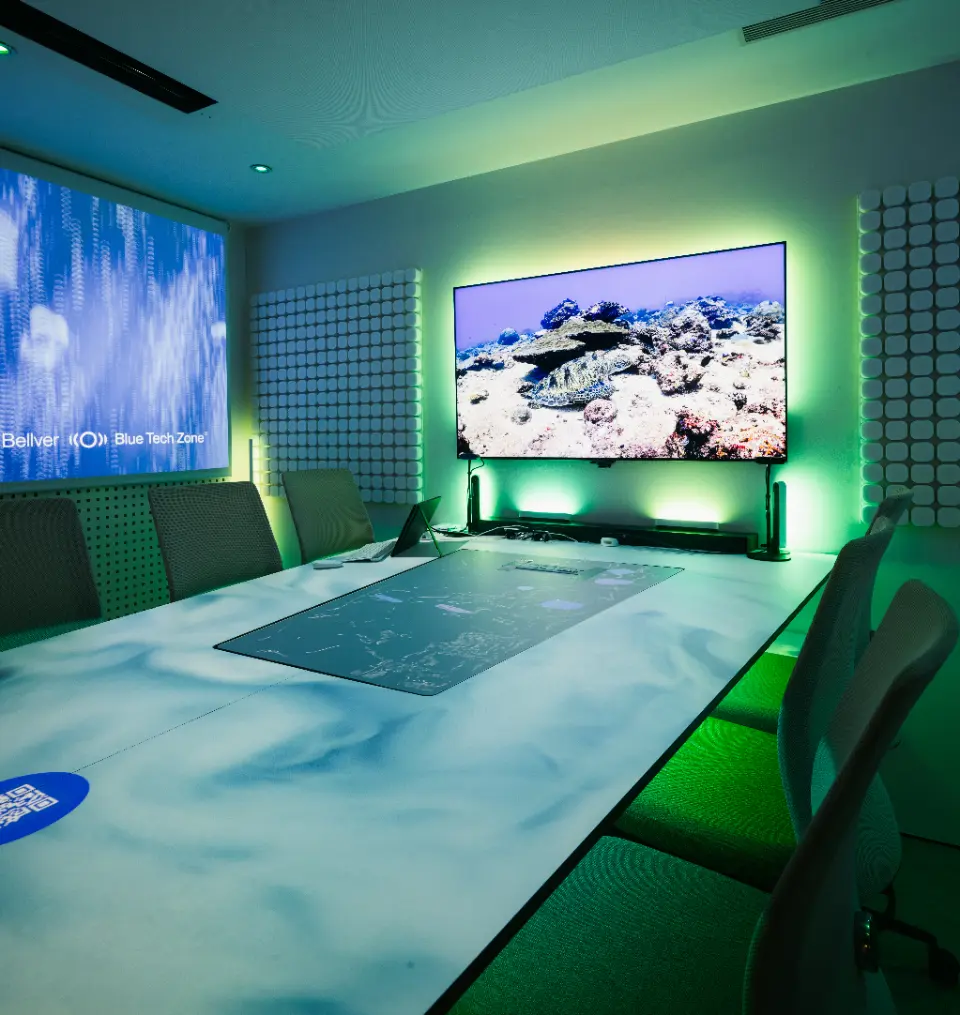
Bellver Blue Tech Zone brings together in a single setting, facing the Mediterranean in Oropesa del Mar (Castellón), conference and meeting spaces, accommodation, catering and its own organisation and technical production team.
For a medical congress or a scientific conference, this makes it possible to handle sessions, the commercial exhibition, working lunches and attendee accommodation in one place, with the scientific programme at the centre and a setting that encourages exchange between professionals.
This was the case with the 43rd Congress on Cardiovascular Diseases of the Valencian Society of Cardiology, held at Bellver Blue Tech Zone from 6 to 8 May 2026 and recognised as being of scientific health interest by the Valencian Regional Health Department. The congress brought together symposia, round tables, oral communications, Primary Care workshops and a commercial exhibition area, with sessions streamed live and accommodation for attendees on site.
If you are considering where to hold your next medical congress or scientific meeting, discover the event spaces at Bellver Blue Tech Zone in Castellón.
Frequently asked questions about organising medical congresses
How far in advance must accreditation for a medical congress be requested?
At least two months before the start of the activity. Applications submitted outside that deadline are not accepted.
What percentage of scientific content does Farmaindustria require?
At congresses and meetings involving companies bound by the Code, scientific content must take up at least 60% of each day. If in doubt, an eight-hour day is assumed.
When must a meeting be notified to Farmaindustria?
When a pharmaceutical company organises or mainly sponsors it, it includes at least one overnight stay and 20 or more healthcare professionals practising in Spain take part. It must be notified to the Ethics Supervision Unit at least 10 working days in advance.
Where can I find the calendar of medical congresses?
Our 2026 corporate events agenda lists congresses and trade fairs by sector, and we will soon publish the 2027 edition.